Overview of Carhartt Workwear
Carhartt Workwear stands as one of the most recognisable brands in the global industrial sector. Founded in the United States, it has transcended the job site to become a cultural icon, yet its core promise remains rooted in durability. For the European handworker, Carhartt represents a specific style of protection: heavy fabrics, boxy cuts, and a rugged aesthetic that differs significantly from the streamlined technical gear often found on our continent.
The brand built its reputation on “Cotton Duck,” a tightly woven canvas designed to resist snags and tears in harsh environments. Unlike many modern synthetic blends, traditional Carhartt gear relies on material thickness and triple-stitched seams for longevity. This approach appeals to workers in agriculture, heavy construction, and general trades who prioritise abrasion resistance over lightweight flexibility.
However, the workwear landscape is shifting. Modern professionals increasingly demand moisture-wicking properties, ergonomic articulation, and certified safety standards. While Carhartt has introduced technologies like “Rugged Flex” and “Force,” it is essential to evaluate if these updates compete with the specialized engineering of European alternatives available in our general Workwear category.
“I believe that when a man wears an article that I manufacture, his self-respect is increased because he knows that it is made by an honest manufacturer, who is honest with his employees.” — Hamilton Carhartt
The History of Carhartt Workwear
Tracing the lineage of Carhartt takes us back to 1889 in Detroit, Michigan. Hamilton Carhartt began with two sewing machines and a half-horsepower electric motor, failing initially before consulting railroad engineers to design the perfect overall. The result was the legendary “Union Suit,” a denim bib overall that set the standard for American durability.
Throughout the 20th century, the brand became synonymous with the American industrial boom. From equipping soldiers in World War I to clothing the workers building the Alaska Pipeline, Carhartt gear was tested in sub-zero temperatures and unforgiving terrain. This history established their reputation for “site-ready” durability, a legacy that continues to influence their design philosophy today.
In the 1990s, the brand experienced an unexpected pivot. The rugged aesthetic was adopted by hip-hop culture and skate scenes, leading to the creation of the “Work In Progress” (WIP) line. However, for the professional tradesperson, the mainline workwear remains the focus. It is crucial to distinguish between the fashion-forward WIP items and the functional gear designed for the grind, which retains the heavy-duty specifications required for trade use.
Design and Innovations of Carhartt Workwear
The design philosophy of Carhartt is historically defined by the “Firm Duck” fabric. This 407 g/m² (12-ounce) heavyweight cotton canvas is wind-resistant and snag-proof, though it is notorious for requiring a “break-in” period. For European workers used to pre-softened, stretch fabrics, the initial stiffness of a traditional Carhartt jacket can be a surprise.
To address modern demands, Carhartt has integrated several key technologies:
- Rugged Flex®: A mechanical stretch technology incorporated into their canvas and denim. It allows for a greater range of motion during squatting or reaching, bridging the gap between durability and ergonomics.
- Carhartt Force®: A sweat-wicking and stain-fighting technology. This is essential for active trades where temperature regulation is critical, moving sweat away from the body to dry faster.
- Storm Defender®: A waterproof, breathable membrane used in their outerwear. It stops rain from penetrating while allowing body heat to escape, a necessity for the unpredictable European climate.
Materials and Durability
While the classic cotton duck is legendary, Carhartt also utilises Cordura® reinforcements in high-wear areas like pocket edges and kick panels on trousers. This nylon-based fabric is significantly stronger than cotton and prevents fraying from tool clips or boot friction. However, many European competitors integrate Cordura® more aggressively, often using it for entire knee-pad pockets or holster pockets as a standard.
Certifications
When sourcing gear, checking for EN/ISO compliance is non-negotiable for many European sites. Carhartt offers a specific line of “High Visibility” and “Flame Resistant” gear that meets US standards (like NFPA 70E), but one must verify if specific items carry the relevant EN ISO 20471 (Hi-Vis) or EN 14404 (Knee Protection) certifications required in the EU/UK. Often, American brands require careful checking to ensure they meet local safety officer requirements compared to certified Workwear manufactured within the EU.
Comparative Analysis
To help you understand where Carhartt sits in the market, we have compared it against two leading European innovators.
Table 1: Technical Comparison of Leading Workwear Brands
| Feature |
Carhartt Workwear |
Blåkläder |
Fristads |
| Primary Material |
Heavyweight Cotton Duck (Canvas) |
Poly-cotton blends / 4-way Stretch |
Recycled Polyester / Organic Cotton (Green line) |
| Weight Range |
Heavy (350–407 g/m²) |
Mid-to-Heavy (250–350 g/m²) |
Light-to-Mid (240–300 g/m²) |
| EN/ISO Certifications |
Select items (mostly US standards) |
Extensive (EN 14404, EN ISO 20471 standard) |
Extensive (First with EPD environmental certs) |
| Key Innovation |
Triple-stitched main seams |
Lifetime Seam Guarantee |
Fusion of sport-tech and workwear |
| Price Positioning |
Mid-range |
Premium |
Premium |
Product Categories of Carhartt Workwear
Carhartt’s product range is vast, covering everything from boots to beanies. For the professional, the catalogue generally splits into core on-site protection and versatile outdoor apparel that crosses over into casual wear.
Core Workwear
This category includes the iconic bib overalls and the B01 Double-Front Work Dungarees. These items are designed for static durability. If you are a welder, carpenter, or mason who spends hours on abrasive surfaces, the double-front leg panels offer excellent protection. The fit is traditionally “Original Fit,” which is spacious and allows for layering, or “Relaxed Fit,” which is slightly closer to the body but still looser than most European cuts.
- Jackets: The Detroit Jacket and Chore Coat are staples. They feature blanket or quilted linings for warmth without bulk.
- Trousers: Known for deep pockets and hammer loops. However, they often lack the “holster pocket” systems popularised by Scandinavian brands.
Outdoor Apparel
Carhartt has successfully dominated the outdoor leisure market with products that serve dual purposes. Their heavy-weight hoodies (like the K121) and the K87 pocket t-shirt are staples in cold warehouses and outdoor sites alike. The acrylic watch hat (A18) is ubiquitous on building sites across Europe, valued for its warmth and simple durability.
- Base Layers: Heavyweight synthetics designed for extreme cold.
- Rain Gear: PVC-coated rainwear that is effectively impermeable, ideal for wash-down bays or torrential downpours.
Alternatives to Carhartt Workwear: A Nuanced Comparison
While Carhartt offers rugged tradition, European brands often provide superior ergonomics and certification compliance. If your work requires high mobility, specific safety ratings, or a modern fit, consider these established alternatives.
Blåkläder Workwear
Based in Sweden, Blåkläder is the antithesis of the “break-in” culture. Their focus is on immediate comfort and extreme utility. Where Carhartt relies on heavy fabric, Blåkläder uses ripstop and stretch panels. Their trousers often feature external holster pockets (nail pockets), which essentially replace a tool belt—a feature rarely standard on Carhartt pants.
- Why choose them: You need built-in tool storage and knee protection certified to EN 14404.
- Key Win: They offer a lifetime guarantee on their seams, a testament to their build quality.
- Explore: Blåkläder Workwear
Fristads Workwear
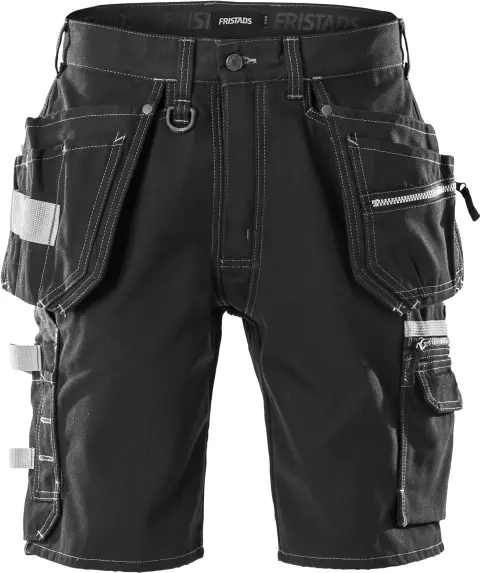
Also hailing from Sweden, Fristads was the first to manufacture jeans for workwear. Today, they lead the industry in sustainability and environmental transparency. Their “Green” collection comes with an Environmental Product Declaration (EPD), mapping the total lifecycle impact of the garment. Technically, they excel in ergonomic fits that mimic high-end hiking gear.
- Why choose them: You prioritise sustainability and lightweight, athletic fits over heavy canvas.
- Key Win: Advanced material blending that offers durability at a much lower weight than cotton duck.
- Explore: Fristads Workwear
Sparco Workwear
Known globally for motorsport safety, Sparco brings racing technology to the job site. Their “Teamwork” line is particularly strong in safety footwear and lightweight operational apparel. Unlike Carhartt’s heavy boots, Sparco safety shoes often resemble trainers, utilizing composite toes and racing-derived sole grip.
- Why choose them: You work in automotive, logistics, or light industry where agility is key.
- Key Win: Footwear that meets S3 safety standards while weighing significantly less than traditional work boots.
- Explore: Sparco Workwear
Summary
Carhartt Workwear remains a formidable choice for those who need heavy-duty abrasion resistance and prefer the classic American aesthetic. Its cotton duck fabric is virtually indestructible, and the brand’s crossover appeal is undeniable. However, for professionals requiring certified knee protection, integrated tool pockets, or 4-way stretch for constant movement, European alternatives often provide a more technical solution.
- Choose Carhartt for: Heavy demolition, agriculture, and cold-weather outdoor work where fabric weight equals warmth and protection.
- Choose Alternatives for: Precision trades, high-mobility tasks, and environments requiring strict EN ISO safety certifications.
- Sizing Note: Remember that Carhartt runs large; European brands tend to have a slimmer, tailored fit.
Frequently Asked Questions
How does Carhartt sizing compare to European brands?
Carhartt sizing is notoriously generous and runs large compared to European standards. Most professionals recommend sizing down one size for a regular fit, whereas brands like Blåkläder or Fristads usually require your exact measured size.
Is Carhartt Workwear waterproof?
Standard Cotton Duck items are water-repellent but not fully waterproof. For complete protection, look for items featuring the “Storm Defender” technology or their PVC-coated rain gear lines.
Does Carhartt gear meet European safety certifications (EN ISO)?
Not all Carhartt gear meets EU standards; much of it is rated for US OSHA/NFPA standards. Always check the specific label for EN ISO 20471 (Hi-Vis) or EN 14404 (Knee Pads) compliance before using on regulated European sites.
How do I wash Carhartt “Duck” canvas trousers?
Wash in cold water (max 30°C) and tumble dry on medium heat to prevent excessive shrinking. Avoid bleach and fabric softeners, as these can degrade the water-repellent finish and reduce the fabric’s durability.
What is the difference between Carhartt WIP and Carhartt Workwear?
Carhartt Workwear is the original line built for manual labour with relaxed cuts and heavy materials. Carhartt WIP (Work In Progress) is a fashion-focused sub-label with slimmer cuts and lighter fabrics, generally not suitable for heavy industrial use.